
Table of Contents
- 1. What is a Miqat? Understanding the Spiritual Boundary
- 2. Traces of Daily Life: A Multi-National Melting Pot
- 2.1. A Crossroads of Three Continents
- 3. Unveiling the Ancient Infrastructure
- 3.1. Voices from the Past: Umayyad and Abbasid Tombstones
- 4. Preserving the Kingdom’s Crossroads
- 5. Frequently Asked Questions
Historic Haul: Over 1,700 Artifacts Unearthed at Ancient Islamic Pilgrimage Site in Saudi Arabia
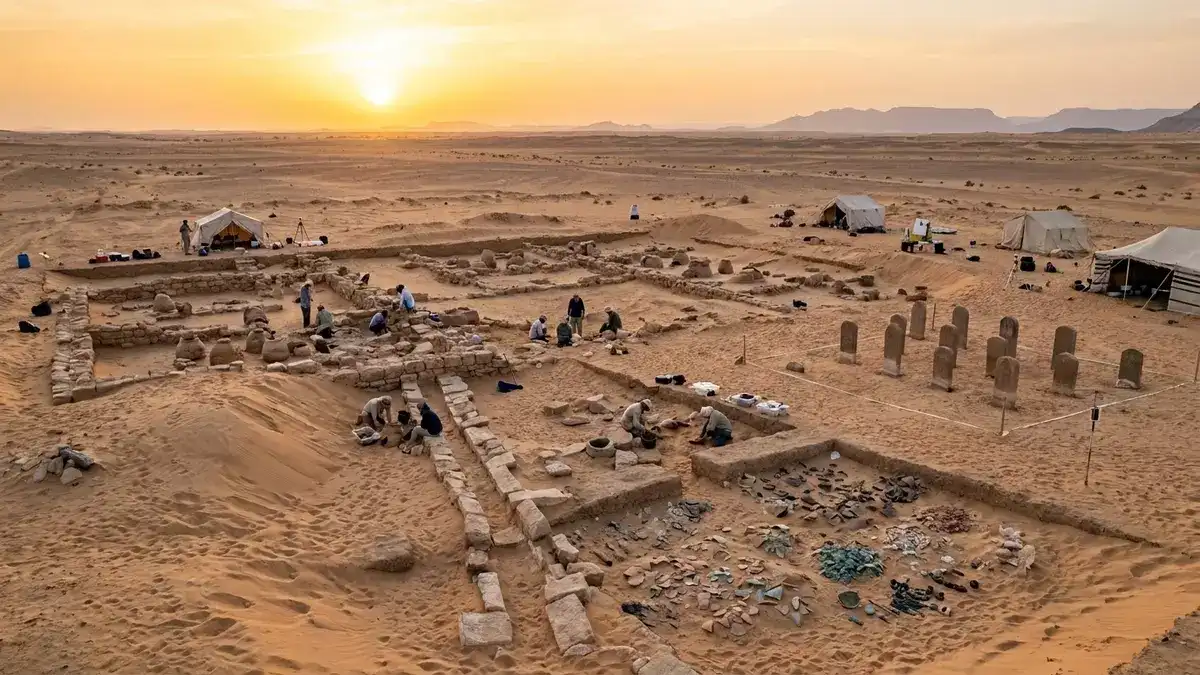
The ancient trade and pilgrimage routes of Saudi Arabia have long been recognized as the structural arteries of early Islamic history. Now, an inaugural archaeological survey at the historic Miqat Al-Juhfah site has pulled back the desert sands to reveal a stunningly dense repository of material culture. Archaeologists have recovered more than 1,700 distinct artifacts, transforming our understanding of the sophisticated infrastructure that supported millions of devout travelers over the centuries.
The sweeping project was spearheaded by the Saudi Heritage Commission in a strategic international partnership with the University of Exeter. Together, the research team has completed the first comprehensive, systematic excavation of this critical node along the ancient Egyptian Hajj route, yielding rare insights into the multi-ethnic, daily realities of early Islamic pilgrimage.
Historic Haul Over 1,700 Artifacts Unearthed at Ancient Islamic Pilgrimage Site in Saudi Arabia
What is a Miqat? Understanding the Spiritual Boundary
To understand the historical weight of this excavation, one must understand the spiritual geography of the Islamic world. Situated roughly 187 kilometers northwest of the holy city of Makkah, Miqat Al-Juhfah is one of the oldest designated miqats in existence.
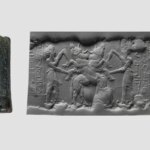
The Spiritual Blueprint of a Miqat
├── 1. Geographic boundary marker encircling Makkah
├── 2. Mandatory stopping point for incoming travelers
└── 3. The threshold where pilgrims enter the sacred state of Ihram
A miqat serves as a mandatory holy boundary. Pilgrims journeying to Makkah for the Hajj or Umrah rituals are religiously required to pause at these specific geographic locations to cleanse themselves, change into traditional white garments, and formally enter the sacred spiritual state of ihram before crossing into the holy territory.
Beyond its ritual purpose, historical Islamic texts closely tie Al-Juhfah to the foundational migration (Hijrah) of the Prophet Muhammad. Classical records indicate that the settlement flourished as a bustling desert oasis during the early Islamic periods, particularly peaking through the eighth and early ninth centuries CE. During this golden age, a sprawling network of marketplaces, roadside inns, and public utilities operated year-round to cater to the massive waves of international travelers.
Traces of Daily Life: A Multi-National Melting Pot
The treasure trove of over 1,700 newly recovered artifacts paints a vivid, deeply human picture of the diverse crowds that passed through the gateway. Rather than finding solely military or royal items, the team unearthed thousands of personal effects linked to the everyday lives of ordinary pilgrims. The collection includes:
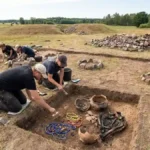
Ceramic and Glassware: Thousands of delicate pottery fragments and ancient glass shards from storage jars, perfume vials, and drinking vessels.
Personal Adornments: Intricately carved stone objects, polished sea shells, and colorful beads from necklaces or prayer strands.
Metalwork: Assorted metallic tools, coins, and hardware utilized by travelers repairing gear or trading in the local markets.

A Crossroads of Three Continents
What makes the artifact assembly exceptionally thrilling for historians is its varied geographic origins. The chemical signatures and stylistic designs of the recovered pottery and metals prove they did not originate locally. Instead, archaeologists identified pieces traced directly back to the Levant, Egypt, and Ethiopia.
This striking material diversity proves that Miqat Al-Juhfah acted as an international crossroads, momentarily binding together completely different cultures, language speakers, and ethnic communities from deep within Africa, the Mediterranean, and the Middle East as they marched toward a singular spiritual destination.
Origins of Artifacts Discovered at Al-Juhfah
├── The Levant (Syria, Jordan, Lebanon, Palestine)
├── Egypt (North Africa / Main Hajj Route)
└── Ethiopia (Horn of Africa / Maritime & Inland Trade)
Unveiling the Ancient Infrastructure
The survey proved that Al-Juhfah was not just a passive campsite; it was a highly engineered, permanent service hub designed to prevent humanitarian disasters in the harsh Arabian climate.
On the surface and just below the sand dunes, the joint Saudi-British team identified six ancient pottery kilns alongside an extensive subterranean water channel. The presence of the kilns proves that the site maintained its own industrial manufacturing, mass-producing clay water jugs and food vessels on-site to supply thousands of travelers simultaneously. Meanwhile, the complex water channel represents an extraordinary feat of hydraulic engineering, successfully routing scarce freshwater directly into the heart of the settlement to keep pilgrims and their pack animals alive during the blistering summer months.
Voices from the Past: Umayyad and Abbasid Tombstones
Among the most historically significant single discoveries of the entire campaign was the unearthing of 13 ancient tombstones. Several of these stone markers feature readable Arabic inscriptions dating safely to the Umayyad and Abbasid Caliphates.
These stones provide epigraphic proof of the site’s unbroken, multi-century occupation. They stand as quiet, solemn monuments to those travelers who fell ill or passed away while on their sacred journey, choosing to be buried directly on the threshold of the holy land.
Preserving the Kingdom’s Crossroads
This landmark survey is part of a much larger, aggressive push by the Saudi Heritage Commission to scientifically document, protect, and study hundreds of vulnerable archaeological sites scattered across the Kingdom. By uncovering the physical remains of Miqat Al-Juhfah, researchers have provided invaluable data regarding the logistical genius of early Islamic civilizations, demonstrating how they built a sprawling, highly efficient infrastructure network capable of welcoming the world.
Frequently Asked Questions
What is the historical role of Miqat Al-Juhfah?
Miqat Al-Juhfah is one of the oldest designated geographic boundaries in Islam. Located 187 kilometers northwest of Makkah, it served as a mandatory stopping point where pilgrims traveling from Egypt, North Africa, and the Levant would cleanse themselves and enter the spiritual state of ihram before entering Makkah.
What kind of artifacts did archaeologists discover at the site?
The team uncovered more than 1,700 individual artifacts, including domestic pottery fragments, glass pieces, ancient metal tools, decorative beads, sea shells, and carved stone objects. They also found 13 highly valuable historical tombstones dating back to the early Umayyad and Abbasid eras.
What do these discoveries tell us about the pilgrims who traveled here?
Because the artifacts originate from distant regions like Egypt, the Levant, and Ethiopia, the site confirms that Al-Juhfah was an international melting pot. It proves that the early Islamic pilgrimage route successfully brought together highly diverse, distant communities from multiple continents.
How did the ancient site support thousands of travelers in the desert?
Excavations revealed an advanced infrastructure, including six industrial pottery kilns used to mass-produce water jars and supply vessels on-site. Archaeologists also discovered a sophisticated engineered water channel designed to harvest and distribute fresh water to massive crowds of people and animals.
Who organized this archaeological excavation?
The survey and excavation campaign was conducted as a collaborative partnership between the Saudi Heritage Commission and the University of Exeter in the United Kingdom, forming part of a broader national initiative to preserve Saudi Arabia’s rich historical legacy.