
**Rare Early English Poem Copy Discovered in Rome**
Scholars have uncovered a remarkable new version of the earliest known poem written in English, hidden for centuries in a manuscript at Rome’s National Central Library. This ninth-century discovery of Cædmon’s Hymn reshapes our understanding of how Old English literature spread across medieval Europe and highlights the vibrant exchange of ideas between England and Italy more than 1,200 years ago.
The find, made by researchers from Trinity College Dublin, identifies an early copy of the short religious poem embedded directly within a Latin text. Dating to around 800–830 CE, it ranks as the third-oldest surviving witness to this foundational work of English literature.
Rare Early English Poem Copy Discovered in Rome

### The Significance of Cædmon’s Hymn in English Literary History
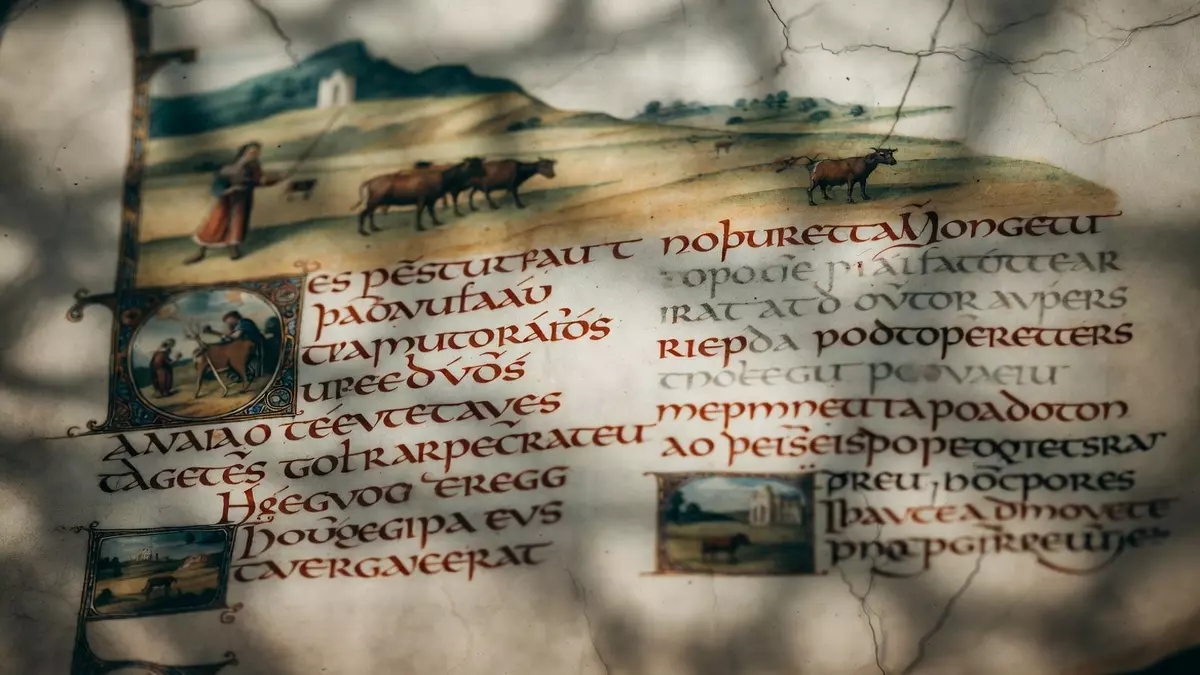
Cædmon’s Hymn consists of just nine lines praising God as the creator of heaven and earth. According to the Venerable Bede’s *Ecclesiastical History of the English People*, it was composed by Cædmon, an illiterate cowherd at Whitby Abbey in North Yorkshire. The story tells how Cædmon, unable to join in poetic performances at a feast, left in embarrassment. In a dream, a divine figure commanded him to sing about creation, inspiring the first recorded verses in the English language.
Bede, writing in Latin around 731 CE, included a Latin translation of the poem rather than the original Old English. For centuries, scholars assumed early copies kept the vernacular text separate, often added as marginal notes. This new Rome manuscript changes that view dramatically. Here, the Old English lines appear integrated into the main body of the Latin history, showing that readers and scribes actively restored the original English poem within about a century of Bede’s work.

This integration offers fresh evidence of how Old English poetry was received and valued in the early medieval period. With only around three million words of Old English surviving today—and even fewer from the seventh and eighth centuries—Cædmon’s Hymn stands as a cornerstone for studying the birth of English literature.
### Inside the Rome Manuscript Discovery
The manuscript, known as Rome, Biblioteca Nazionale Centrale ‘Vittorio Emanuele II’, Vitt. Em. 1452, was produced at the Benedictine Abbey of Nonantola in northern Italy during the first third of the ninth century. Researchers Dr. Elisabetta Magnanti and Dr. Mark Faulkner from Trinity College Dublin spotted the significance after the library digitized the codex and made high-resolution images available online.

What makes this version special is its textual features. It represents the earliest known example of the Northumbrian “eordu” recension, named for a distinctive wording in the fifth line. Previously, the oldest manuscript preserving this variant dated to the late twelfth century. The Rome copy pushes back the documented history of this version by more than 300 years.
Additionally, the Old English text features unusual interword interpuncts—small marks separating words. This punctuation style is rare in surviving Old English manuscripts and hints that earlier copying practices may have been more diverse than previously thought. Such details provide linguists with valuable clues about how scribes worked and how the poem evolved through transmission.
The manuscript’s journey reflects the turbulent history of European libraries. Created in Italy, it later moved to the church of San Bernardo alle Terme in Rome for safekeeping during the Napoleonic era. It was subsequently stolen, passed through private hands, and eventually reached the National Central Library. Many scholars had assumed it lost since the 1970s, with only brief mentions in older catalogs. The digitization effort allowed remote study from Ireland, leading to this breakthrough.
### How the Discovery Changes Medieval Manuscript Studies
Previous surviving copies of Cædmon’s Hymn appear in manuscripts held in Cambridge and St. Petersburg. In those, the Old English verses typically sit in margins or at the end of Latin texts. The Rome manuscript’s embedded placement suggests greater appreciation for the vernacular among continental readers and scribes. It demonstrates that English poetic traditions traveled quickly across Europe, carried by monks, pilgrims, and scholars.
This cross-cultural exchange was common in the early Middle Ages. Northumbrian monasteries like Whitby maintained strong ties with continental centers of learning. The Nonantola Abbey, known for its scriptorium, played a key role in preserving classical and Christian texts. Finding an English poem there underscores the interconnectedness of medieval intellectual life.
**H3: Linguistic and Cultural Insights**
Linguists are particularly excited about the Northumbrian dialect features preserved in this early copy. Old English varied by region, and Northumbrian versions offer a window into the language spoken in northern England during the Anglo-Saxon period. The poem’s survival in multiple recensions also illustrates how oral and written traditions interacted, with scribes adapting texts for different audiences.
The discovery enriches our knowledge of Bede’s influence. His *Ecclesiastical History* was one of the most widely copied historical works in medieval Europe. Inserting the original English hymn shows active engagement with the source material rather than passive copying.
### Broader Context of Early English Poetry
Cædmon’s Hymn marks a pivotal moment: the transition from oral Germanic poetry to Christian literary expression in English. Before this, much Anglo-Saxon verse existed in oral form. The hymn blends traditional poetic structures—such as alliteration and stress patterns—with biblical themes of creation, similar to Genesis.
Its importance extends beyond literature. The poem reflects the rapid Christianization of England following the arrival of missionaries like St. Augustine in 597 CE. Whitby Abbey, where Cædmon lived, hosted the famous Synod of Whitby in 664 CE, which aligned English Christianity with Roman practices. The abbey became a major cultural and religious center, making Cædmon’s story symbolically powerful.
With most surviving Old English texts coming from the tenth and eleventh centuries, early examples like this are precious. They help trace the development of the English language from its Germanic roots toward the forms recognizable today. Scholars can now compare this ninth-century witness with later versions to study textual stability and variation over time.
### The Role of Digitization in Modern Discoveries
This find highlights the power of digital humanities. By making manuscripts freely accessible online, libraries enable global collaboration. Researchers no longer need physical access to every codex, accelerating new interpretations of familiar collections. The Rome manuscript, overlooked for decades, now contributes significantly to Anglo-Saxon studies thanks to these efforts.
Future research may involve multispectral imaging, paleographic analysis, or even DNA testing of the parchment to learn more about its origins and production. Comparative studies with other Nonantola manuscripts could reveal additional hidden treasures.
### Connecting Past and Present Literary Traditions
For modern readers, especially in the English-speaking world, Cædmon’s Hymn represents the deep roots of our literary heritage. It predates *Beowulf* and other famous works, standing at the dawn of written English creativity. The story of an ordinary cowherd inspired by divine vision resonates with themes of unexpected talent and spiritual awakening that continue to inspire.
The discovery also reminds us of the fragility and resilience of cultural heritage. Manuscripts survived wars, thefts, and neglect to reach us today. Their stories—of movement across borders and preservation against odds—mirror the journeys of the texts they contain.
As interest in medieval history, linguistics, and origins of English grows, finds like this captivate both academics and general audiences. They humanize the distant past, showing how people in the ninth century valued poetry, faith, and knowledge in ways that feel strikingly familiar.
### Why This Matters for Language Lovers and Historians
This new copy not only adds to the corpus of early English but also sparks discussion about manuscript culture, textual transmission, and Anglo-Italian connections. It demonstrates that even well-studied fields like Bede scholarship can yield surprises when fresh eyes examine digitized sources.
The study, published in *Early Medieval England and Its Neighbours*, provides a full transcription and critical edition. It invites further exploration of how early English poems influenced continental traditions and vice versa.
In classrooms, museums, and online resources, Cædmon’s Hymn can now be taught with richer context. The Rome manuscript brings us closer to the voices of Anglo-Saxon England, preserved through the careful work of Italian scribes centuries ago.
This rediscovery celebrates the enduring power of words. From a Northumbrian cowherd’s dream to a modern library in Rome, the hymn continues to echo across time, reminding us of the shared human impulse to create and preserve stories that define who we are.
## FAQ: Cædmon’s Hymn and the Rome Manuscript Discovery
**Q: What makes Cædmon’s Hymn the earliest known English poem?**
A: Composed in the seventh century and recorded by Bede in the eighth, it represents the first surviving verses in Old English, blending Christian themes with traditional poetic forms.
**Q: How old is the newly discovered Rome manuscript?**
A: It dates to approximately 800–830 CE, making it one of the oldest copies and the earliest witness to the Northumbrian “eordu” recension.
**Q: Why is the placement of the poem significant?**
A: Unlike marginal additions in other early copies, the Old English text is embedded directly in the Latin main text, showing active integration and appreciation of vernacular poetry.
**Q: Where was the manuscript produced?**
A: At the Benedictine Abbey of Nonantola in northern Italy, later moved to Rome amid historical upheavals.
**Q: How was the discovery made?**
A: Trinity College Dublin researchers identified the poem after the Italian library digitized the manuscript and made it available online.
**Q: What does this tell us about medieval Europe?**
A: It illustrates strong cultural and textual exchanges between England and Italy, with English poems preserved and copied in continental monasteries.
**Q: Can the public access the manuscript?**
A: Digital images are available through the National Central Library of Rome, allowing scholars and enthusiasts worldwide to study this important artifact.
The Rome manuscript breathes new life into the study of early English literature. As researchers continue to explore its details, Cædmon’s ancient hymn reminds us how a simple dream-inspired song helped lay the foundations for the rich literary tradition we inherit today. (Word count: 1,265)