
Pristine Prehistoric Cave Found Near Haifa Offers Rare Insight
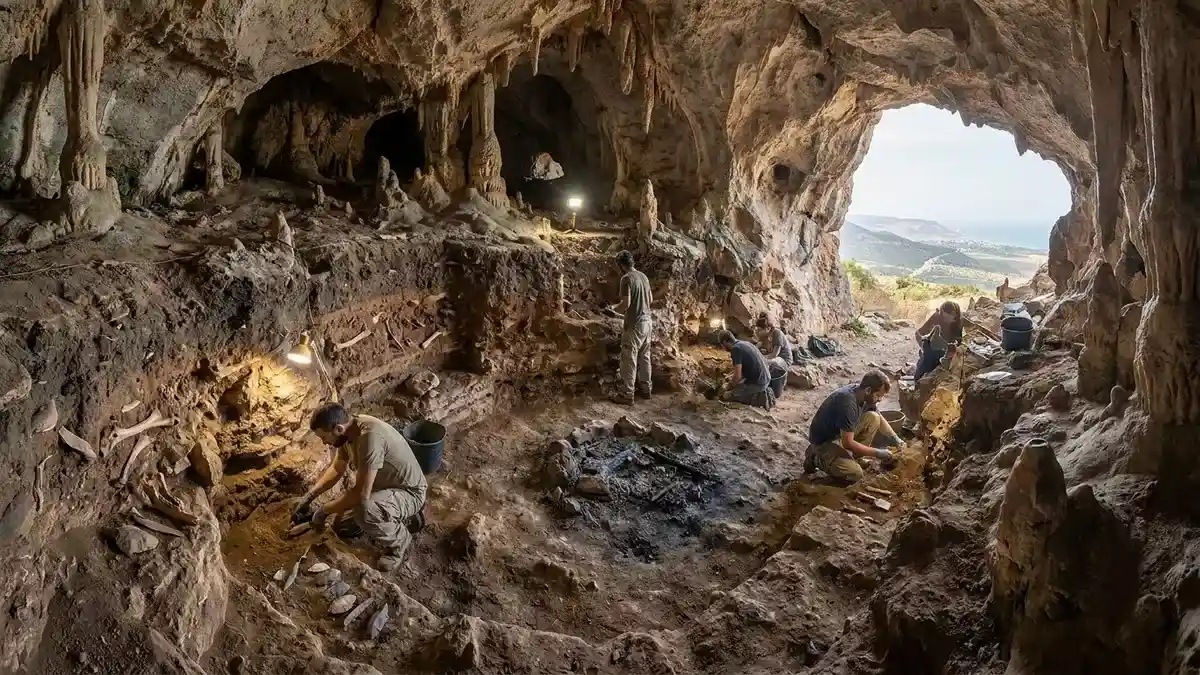
Archaeologists have unearthed a remarkable time capsule near the town of Fureidis, just south of Haifa, Israel. This ancient cave, which remained sealed for hundreds of thousands of years, provides an unprecedented window into the lives of early human ancestors. Dating back to between 400,000 and 250,000 years ago, the site offers scientists a rare, undisturbed look at a pivotal era in human development that is notoriously difficult to study.
The discovery, located near the Zikhron Ya’akov interchange, is being hailed as a major archaeological milestone. By preserving layers of sediment and artifacts in near-perfect condition, the site promises to fill significant gaps in our understanding of the Lower Paleolithic period—a time long before the emergence of modern humans and Neanderthals as dominant forces across Eurasia.
Pristine Prehistoric Cave Found Near Haifa Offers Rare Insight
A Rare Window into the Lower Paleolithic
The Lower Paleolithic was a transformative era, yet finding intact evidence from this timeframe is a significant challenge for researchers. Many sites dating back to this period have been compromised by either subsequent human activity or environmental degradation. The cave near Fureidis is an exception to this trend, having remained sealed and protected from external elements for eons.

According to researchers from the Israel Antiquities Authority and the University of Haifa, the cave belongs to the Acheulo-Yabrudian culture. This cultural phase marks the final stages of the Lower Paleolithic. Because the cave has been sealed for so long, it functions as a pristine laboratory, allowing archaeologists to examine the remnants of daily life without the confusion caused by thousands of years of site disturbance.
Why This Discovery Matters
The rarity of this site cannot be overstated. In the Levant, where archaeological history is incredibly dense, finding a “clean” stratigraphic record from this specific period is like finding a needle in a haystack. This discovery allows experts to analyze human behavior, social organization, and technological innovation with a level of precision that has rarely been achieved in previous excavations.
Unlocking the Secrets of Acheulo-Yabrudian Life
The artifacts recovered from the Fureidis cave offer a masterclass in the technological capabilities of our early ancestors. The team has already unearthed a sophisticated collection of stone tools, including handaxes, scrapers, and blades. These are not merely crude rocks; they represent advanced flint-working techniques that allowed these early groups to manipulate their environment effectively.

Advancements in Toolmaking
The presence of these specific tools—particularly the handaxes—demonstrates a high degree of craftsmanship. These objects were essential for survival, likely used for butchering game, processing plant materials, and working hides. By studying the progression of these techniques, archaeologists can track how early humans refined their skills and adapted to new ecological challenges over generations.
Evidence of Communal Living
Beyond technology, the cave provides evidence of shifts in social structure. Data from other sites of this era suggest that human groups were beginning to shift from highly nomadic lifestyles to more sedentary patterns, occupying caves for longer durations. There is also clear evidence of fire usage, a critical discovery that highlights the mastery of heat and light.
Researchers believe these habits—longer residency times and controlled fire usage—are clear indicators of increasing social cooperation. Sharing a hearth and spending extended periods together would have encouraged the transmission of knowledge and strengthened communal bonds, paving the way for the more complex social structures seen in later human populations.
 Radiocarbon dating confirms Teutonic Knights built Feldioara Fortress in 13th-century Transylvania
Diet and Environment in the Middle Pleistocene
The cave is not just a repository for stone tools; it is a treasure trove of biological data. The discovery of animal bones provides direct clues about the diet of the cave’s inhabitants. The identified remains include fallow deer, gazelles, and ancient horses, suggesting that these early humans were skilled hunters capable of targeting a variety of prey.
The location of the cave near reliable water sources likely played a critical role in why it was chosen. Access to fresh water would have attracted both the game the humans hunted and the human groups themselves. This synergy between human requirements and environmental features explains the recurring visits to the site, marking it as a hub of activity in the prehistoric landscape.
Comparing Fureidis to Nahal Me’arot
The research team is already drawing parallels between this new find and the famous prehistoric sites at Nahal Me’arot. Located in northern Israel, Nahal Me’arot is world-renowned for its well-preserved record of human evolution. However, the Fureidis site may offer an even higher level of resolution due to its sealed nature.
The ability to look at human activity on a “finer scale” means researchers can identify nuances in behavior that are usually lost. They hope to map out the daily routines of these ancient groups, understanding how they organized their living spaces and how they responded to the fluctuating environmental conditions of the Middle Pleistocene.
A Future for Research and Public Access
The significance of the Fureidis discovery has prompted the research team to launch a comprehensive, long-term study. This program will integrate findings on human behavior with climate data to create a holistic picture of life during this epoch.
Looking ahead, the plans for the site extend beyond scientific papers and academic journals. The researchers intend to make the cave accessible to the public once the initial research phases are complete. This will provide a rare opportunity for students, local residents, and history enthusiasts to witness one of the most important archaeological sites in the region firsthand. By connecting the public with the deep past, the team hopes to foster a greater appreciation for the evolutionary journey that shaped modern society.
Frequently Asked Questions (FAQ)
1. Where exactly was this prehistoric cave discovered?
The cave was discovered near the town of Fureidis, located south of Haifa, in close proximity to the Zikhron Ya’akov interchange in Israel.
2. How old is the site?
The cave dates back to between 400,000 and 250,000 years ago, placing it in the final stages of the Lower Paleolithic period.
3. Why is this cave considered a significant find?
It is significant because it remained sealed for hundreds of thousands of years. This protected state means the artifacts and sediment layers are undisturbed, offering researchers a rare, high-resolution look at early human behavior during the Acheulo-Yabrudian culture.
4. What kind of items have archaeologists found in the cave?
Excavations have uncovered advanced flint tools such as handaxes, scrapers, and blades, as well as animal bones from species like fallow deer, gazelles, and ancient horses.
5. Will the public be able to visit this site?
Yes, the research team is planning to make the site accessible to the public, including students and visitors, once the primary research and documentation phases are finished.