
**7,000-Year-Old Beaver Pit Reveals Neolithic Fur Hunting**
Archaeologists in Germany have made a fascinating discovery that sheds new light on the daily lives and resourcefulness of Europe’s earliest farmers. A 7,000-year-old pit crammed with beaver bones near the town of Alsleben points to organized hunting practices focused on valuable fur, revealing how Neolithic communities crafted clothing and utilized local wildlife more than 6,900 years ago.
This unusual find emerged during routine archaeological surveys ahead of the massive SuedOstLink high-voltage electricity line project in Saxony-Anhalt. The project cuts through historic landscapes rich in ancient settlements, giving experts a rare chance to explore the past before modern infrastructure takes over.
7,000-Year-Old Beaver Pit Reveals Neolithic Fur Hunting
 Were Neanderthals capable of making art?
### The Excavation That Uncovered Ancient Secrets
The site sits above the Saale River, where the power line crosses using advanced trenchless technology to minimize surface disruption. Archaeologists from the State Office for Heritage Management and Archaeology Saxony-Anhalt identified layers of human activity spanning the Neolithic, Bronze Age, and Iron Age. Among typical features like postholes, storage pits, and burials, one small pit stood out.
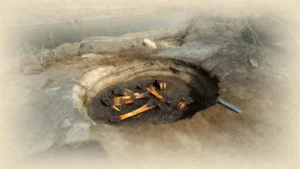
Measuring just 80 centimeters across, the feature contained a dense concentration of animal bones. Orange-brown incisors immediately signaled beaver remains. A flint tool found in the upper layers suggested an early date, prompting the team to carefully extract the entire pit as a single block for detailed lab study.
 Harriet and Leon Pomerance Fellowship
Radiocarbon dating confirmed the deposit dates between 4935 and 4787 BCE, placing it firmly in the early Neolithic period and linking it to the Stroke-Ornamented Ware Culture. This group of early farmers is known for distinctive pottery decorated with linear patterns, marking a time when agriculture was taking hold across central Europe.
### Inside the Beaver Bone Deposit
Laboratory analysis revealed an extraordinary find: the pit contained bones exclusively from beavers, with remains from at least 12 individuals based on skull fragments. The preservation is remarkable, with many bones intact despite their age. However, the skeletons were incomplete and jumbled, lacking full anatomical order.
This pattern indicates the animals were not dumped as fresh carcasses. Instead, researchers believe hunters skinned the beavers for their prized pelts, left the bodies to decompose elsewhere, and later gathered the leftover bones for deliberate disposal in this concentrated pit. The collection includes beavers of various ages—from young animals around one year old to mature adults over eight years—suggesting sustained, targeted hunting rather than a one-time event.
Beavers would have thrived along the nearby Saale River, providing an accessible and reliable resource. Their dense, water-resistant fur offered excellent material for warm clothing, blankets, and possibly trade goods in Neolithic Europe, where woven textiles were still emerging and animal skins remained essential for survival in variable climates.
### Why Fur Hunting Mattered in Neolithic Life
The Neolithic period marked a revolutionary shift in human history. As communities transitioned from hunting and gathering to farming and herding around 7,000–8,000 years ago in central Europe, they continued to rely heavily on wild animals for materials beyond just meat. Fur, in particular, provided durable, insulating clothing crucial for enduring colder seasons.
Unlike everyday food waste scattered around settlements, this single-species bone pit suggests specialized activity. It may represent a dedicated processing or discard area tied to fur production. Such evidence is rare because organic materials like fur and hides rarely survive in the archaeological record due to decay. This deposit offers a valuable indirect glimpse into clothing practices that would otherwise remain invisible.
**H3: Organized Resource Use by Early Farmers**
The Stroke-Ornamented Ware people were skilled at managing their environment. They cultivated crops, raised livestock, and maintained connections with wild resources. The Alsleben pit demonstrates planned hunting strategies, possibly involving seasonal trapping or communal efforts along riverbanks. Different age groups in the remains imply knowledge of beaver populations and sustainable harvesting techniques, even if not consciously managed.
This find adds depth to our understanding of how early agricultural societies supplemented their diets and economies. While grains and domestic animals formed the backbone of their food supply, wild game like beavers contributed high-value byproducts such as fur, which could enhance comfort, status, or exchange networks.
### Broader Context of the SuedOstLink Discoveries
The SuedOstLink project spans roughly 170 kilometers through Saxony-Anhalt, a region known for fertile soils that have supported human habitation for millennia. Pre-construction archaeology has uncovered numerous sites, painting a richer picture of prehistoric life in the area.
The beaver pit stands out among more common finds because of its specificity. It highlights how infrastructure projects can lead to unexpected scientific breakthroughs. By rescuing and analyzing features like this before they are disturbed, researchers preserve vital clues about our ancestors’ ingenuity and adaptability.
### Implications for Understanding Prehistoric Clothing and Economy
In an era before synthetic fabrics or advanced weaving, animal pelts were indispensable. Beaver fur, with its unique properties, would have been particularly prized for its warmth and durability. The discovery suggests that Neolithic groups invested time and effort into specialized hunting, processing, and waste management—behaviors that reflect growing social complexity and economic specialization.
This evidence challenges simplistic views of early farmers as solely focused on agriculture. Instead, it shows a balanced approach that integrated wild resources into daily life. The careful collection of bones may even hint at cultural or ritual significance, though more research is needed to explore that possibility.
Future studies could involve detailed osteological analysis, ancient DNA testing on the remains, or comparisons with other sites to trace the extent of beaver exploitation across Neolithic Europe. Isotopic analysis might reveal seasonal patterns or the animals’ diets, offering further environmental insights.
### Connecting the Past to Our World Today
Discoveries like the Alsleben beaver pit remind us of humanity’s long relationship with the natural world. Beavers, once widespread across Europe, were later hunted to near extinction in many areas but have made impressive comebacks through conservation. Learning how Neolithic people interacted with them provides perspective on sustainable resource use and environmental history.
For modern audiences, this story resonates with growing interest in ancient technologies, survival skills, and the roots of our clothing traditions. It humanizes the distant past, showing that people 7,000 years ago faced similar needs for warmth and protection while innovating ways to thrive in their landscapes.
As climate and development continue to shape our world, archaeological finds along infrastructure routes like SuedOstLink play a critical role in documenting cultural heritage. Each bone, tool, and pit adds another piece to the puzzle of how European societies evolved from the Neolithic onward.
This remarkable discovery not only enriches our knowledge of prehistoric hunting and material culture but also underscores the importance of protecting archaeological sites amid modern progress. The beaver bones from Alsleben continue to tell their story, offering a window into a time when humans were building the foundations of the communities we know today.
## FAQ: The 7,000-Year-Old Beaver Bone Pit in Germany
**Q: How old is the beaver bone pit discovery exactly?**
A: Radiocarbon dating places the pit between 4935 and 4787 BCE, making it approximately 7,000 years old and associated with the early Neolithic Stroke-Ornamented Ware Culture.
**Q: Why were so many beaver bones concentrated in one small pit?**
A: The bones came from at least 12 beavers hunted primarily for fur. After skinning, carcasses likely decomposed elsewhere, and the remaining bones were gathered and deposited together in this deliberate feature.
**Q: What does this tell us about Neolithic clothing?**
A: It suggests early farmers used beaver pelts for warm, durable clothing and other items. Such specialized hunting fills gaps in the record since actual furs rarely survive thousands of years.
**Q: Where was the pit discovered and why?**
A: Near Alsleben in Saxony-Anhalt, Germany, along the route of the SuedOstLink power line project. Rescue archaeology ahead of construction revealed the site above the Saale River.
**Q: Were the beavers eaten or only used for fur?**
A: Evidence points mainly to fur use, as the bones show disarticulation and missing elements consistent with skinning and later bone collection rather than food waste.
**Q: How rare is a find like this in European archaeology?**
A: Very rare. Single-species bone deposits tied to fur processing are uncommon, providing exceptional insight into organized wild resource management by early farming communities.
**Q: What other periods were found at the Alsleben site?**
A: The area showed activity from the Neolithic through the Bronze and Iron Ages, including various settlement features alongside this unique beaver pit.
The Alsleben discovery opens exciting new avenues for research into Neolithic lifeways. As scientists continue examining the remains, we gain a clearer picture of how our ancestors skillfully navigated their environment, turning natural resources into essential tools for survival and comfort. This ancient beaver hunt connects us to the enduring human drive to adapt and innovate.