
**Young Workers Hit Hardest in Basel’s Last Plague Outbreak**
Archaeologists in Switzerland have uncovered a sobering story of inequality during one of Basel’s final major plague epidemics. By studying 15 carefully excavated graves from a 17th-century hospital cemetery, researchers have revealed that young laborers faced the highest death rates during the outbreak around 1667–1668. The findings combine skeletal analysis, ancient DNA, and historical records to show how social class, heavy work, and limited resources shaped survival during this deadly crisis.
This discovery offers a rare, intimate look at how ordinary people experienced one of history’s last major plague waves in Central Europe. It highlights the enduring truth that pandemics often strike the most vulnerable the hardest.
Young Workers Hit Hardest in Basel’s Last Plague Outbreak

### The Hospital Cemetery That Told a Hidden Story
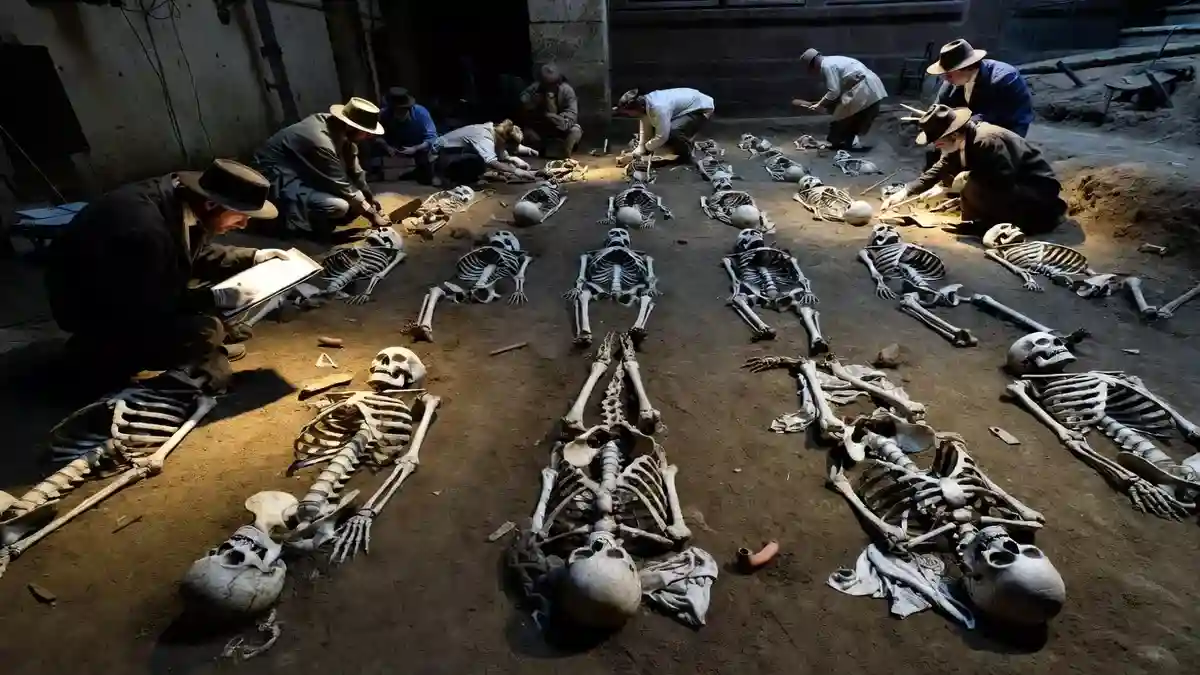
The burials were found at the site of a former monastery in Basel that had been converted into a hospital during the epidemic. Fifteen individuals were laid to rest in closely spaced graves over a short period. Ancient DNA testing confirmed the presence of *Yersinia pestis*, the bacterium responsible for plague, in several remains. A stamped clay pipe discovered in one grave helped researchers pinpoint the timing to a known outbreak in 1667 or 1668.
Unlike typical cemeteries that accumulate over decades, this group of graves reflects a sudden surge in deaths tied directly to the plague. The indoor excavation in the music hall of the Stadtcasino provided an exceptional opportunity to study the remains in detail.

### Shockingly Young Victims and Signs of Hard Labor
The most striking finding is the age of the deceased. The average age at death was under 18, with many individuals showing clear evidence of intense physical strain from a young age. Skeletal markers — including joint wear, bone changes, and stress indicators — reveal lives marked by heavy manual labor. These young people likely worked long hours in trades, construction, or other demanding jobs just to survive.
Many skeletons also displayed signs of earlier health challenges, such as nutritional deficiencies and repeated periods of illness. Stable isotope analysis of bones and teeth confirmed uneven access to quality food, pointing to chronic nutritional stress that would have weakened their immune systems and made them more vulnerable to infection.
 Rare 19th-century bone dental bridge found in Portugal points to early cosmetic tooth replacement
### Social Inequality and the Plague’s Uneven Impact
Historical records from Basel paint a clear picture of why these young workers were at such high risk. The city was an important trading hub, and authorities kept gates open to maintain commerce even during outbreaks. This decision helped the disease spread while poorer residents had little choice but to continue working for daily wages.
The study reveals important differences even within lower social classes. Family connections, citizenship status, and local reputation often determined who received better care or support in the hospital. Those without strong social networks faced greater danger. The graves reflect not just a biological event but a social crisis in which economic necessity and limited resources determined who lived and who died.
### Daily Life and Health on the Eve of the Outbreak
The young individuals buried here were likely apprentices, day laborers, or servants from modest backgrounds. Their skeletal remains tell stories of repetitive physical work starting in childhood, poor diets, and crowded living conditions — all factors that increased exposure to plague-carrying fleas and bacteria.
The presence of a clay pipe with a maker’s stamp from Mannheim, Germany, in one grave adds a personal touch. It suggests the individual may have been a traveler or had connections beyond Basel, but ultimately shared the same tragic fate as the others.
### Scientific Methods Behind the Breakthrough
The research team combined multiple cutting-edge techniques. Ancient DNA analysis provided definitive proof of plague, while careful osteological examination revealed details about age, sex, physical activity, and pre-existing health conditions. Isotope studies offered independent evidence of diet and mobility. This multidisciplinary approach, published in the journal *Antiquity*, sets a strong example for future studies of historical pandemics.
### Lessons That Echo Across Centuries
The Basel findings align with patterns observed in more recent pandemics, where social and economic status strongly influence exposure and outcomes. Young, working-class individuals carried a disproportionate burden during the 17th-century outbreak, much as certain groups have faced higher risks in modern health crises.
The research also underscores the value of archaeology in understanding how disease interacts with society. By examining the physical remains alongside historical documents, scholars gain a fuller picture of the human cost behind large-scale events. These graves record more than just deaths — they preserve evidence of inequality, resilience, and the daily struggles of ordinary people.
### Broader Context of Plague in 17th-Century Europe
The outbreak in Basel occurred during a period when plague still periodically swept across Europe, though its frequency had declined from the devastating 14th-century Black Death. Cities like Basel balanced the need to contain disease with the economic necessity of keeping trade routes open. The conversion of a monastery into a hospital reflects both civic responsibility and the limitations of medical knowledge at the time.
This study contributes to a growing body of research on historical plagues, helping scientists track the evolution of *Yersinia pestis* and understand how past societies responded to similar threats.
### Why This Discovery Matters Today
The young workers buried in Basel remind us that pandemics do not affect everyone equally. Their stories highlight the importance of addressing social determinants of health — access to nutrition, safe working conditions, and support networks — both in the past and in the present.
As modern cities face new health challenges, lessons from 17th-century Basel remain relevant. Strong social safety nets, equitable access to care, and attention to vulnerable populations can make a significant difference during outbreaks.
### Ongoing Analysis and Future Insights
All remains and artifacts from the site are undergoing further laboratory study. Researchers continue to analyze the skeletal material for additional clues about diet, mobility, and specific diseases. Future publications will likely provide even deeper insights into the lives of these individuals and the broader social context of the epidemic in Basel.
This project also demonstrates the value of close collaboration between archaeologists, historians, and geneticists in reconstructing the past.
### Conclusion: Unequal in Life, United in Death
The graves from Basel’s 17th-century plague hospital reveal a tragic reality: young workers from lower social classes paid the highest price during the outbreak. Their remains preserve clear evidence of hard lives cut short by disease, poor nutrition, and limited opportunities.
This powerful archaeological discovery enriches our understanding of how plague affected real people and how social structures shaped survival during times of crisis. It stands as a poignant reminder that behind historical statistics are individual stories of hardship, resilience, and loss.
As researchers continue to study these remains, the young victims of Basel’s last major plague continue to speak across the centuries — teaching us important lessons about inequality, public health, and human vulnerability that remain strikingly relevant today.
### FAQ: Basel Plague Study and Young Workers
**When did the Basel plague outbreak occur?**
The burials date to around 1667–1668, during one of the city’s final major plague epidemics in the 17th century.
**How many individuals were buried in the hospital cemetery?**
Fifteen people were interred in closely spaced graves over a short period, all confirmed or strongly linked to plague.
**Why were young workers most affected?**
Heavy physical labor from childhood, poor nutrition, crowded living conditions, and the necessity to keep working during the outbreak increased their exposure and vulnerability.
**What scientific methods confirmed the plague?**
Ancient DNA testing identified *Yersinia pestis*, while skeletal analysis and isotope studies revealed details about age, labor, diet, and health.
**What does the clay pipe tell us?**
The stamped pipe helped date the graves precisely and suggests some individuals had connections outside Basel.
**How does this study relate to modern pandemics?**
It shows how social and economic factors influence disease outcomes, a pattern that continues to appear in contemporary health crises.