
**1,000 Ancient Features Discovered Along Czech Railway**
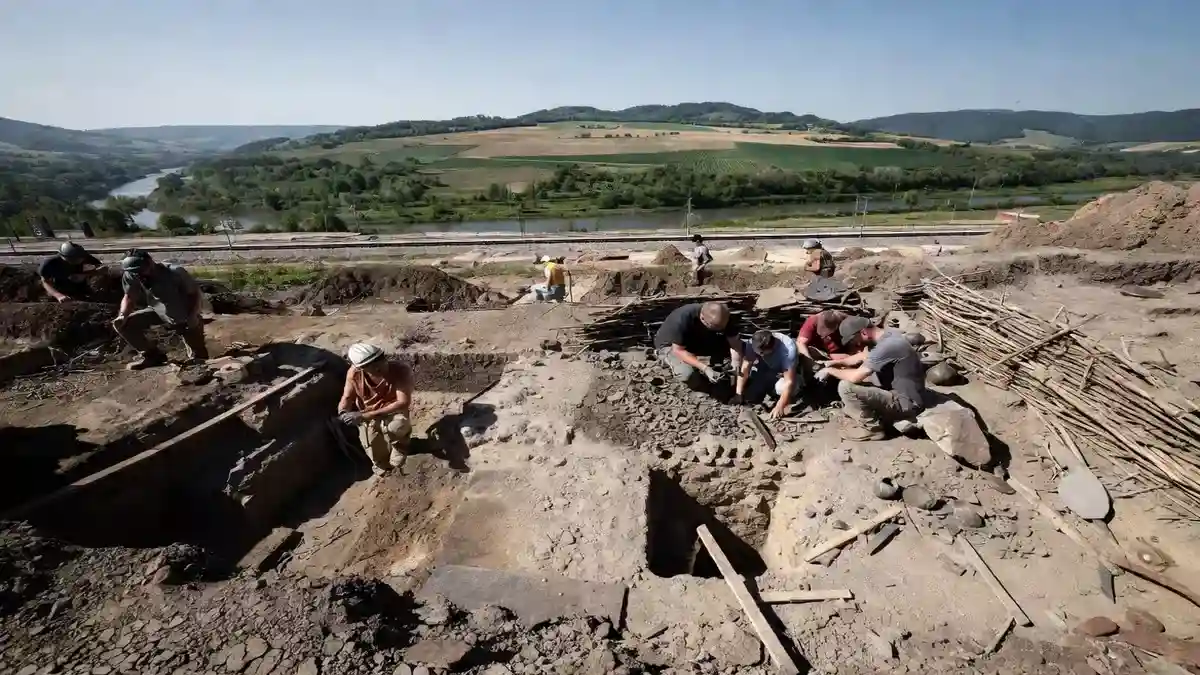
Archaeologists in the Czech Republic have made an extraordinary discovery during preparations for a new high-speed railway line. In just a 1.2-kilometer stretch of the route between Nezamyslice and Kojetín, teams uncovered more than 1,000 archaeological features spanning thousands of years of human history in the Haná River valley. This remarkable find offers a detailed look at how ancient communities lived, worked, and honored their dead from the Early Bronze Age through the Roman period.
The rich concentration of remains highlights the area’s long appeal for settlement and provides fresh insights into prehistoric and early historic life in Central Europe. What began as a routine rescue excavation has become one of the most significant projects in the region in recent years.
1,000 Ancient Features Discovered Along Czech Railway
 Vikings (Quiz)
### Massive Rescue Dig Along the Brno-Přerov Railway
The discoveries came during upgrades to the Brno to Přerov railway corridor, specifically within a larger 9.6-kilometer construction zone. Experts from the Archaeological Centre Olomouc conducted intensive fieldwork from April through late October. The unusually high density of features makes this site one of the richest settlement complexes documented in this part of Moravia.
Such rescue excavations are vital in modern infrastructure projects. They allow archaeologists to document and preserve evidence before construction permanently alters the landscape. In this case, the team worked quickly yet carefully to record everything from postholes to burials before the high-speed rail advances.
 Popcorn’s discovery 7,000 years ago: archaeologist explores its ancient appeal in the Americas
### Early Bronze Age Věteřov Culture Homes and Daily Life
The oldest remains belong to the Věteřov culture of the Early Bronze Age. Archaeologists uncovered traces of post-built houses constructed with wattle-and-daub walls. When fires swept through the settlement, the clay walls hardened like pottery, preserving remarkable details. Some fragments show smooth exterior surfaces, while others retain clear imprints of woven branches from the interior framework — offering a rare glimpse into ancient building techniques.
Artifacts from this period paint a picture of everyday activities. Pottery vessels, spindle whorls for textile production, beads, and a bone pin reflect domestic life and craftsmanship. A bronze pin with a Cypriot-style head hints at possible long-distance connections even this early. Two settlement burials stood out, including one containing an adult and child buried together. These remains are now undergoing detailed anthropological examination to learn more about the community’s health and relationships.

### Urnfield Culture: Rituals, Burials, and Bronze Workshops
Later layers connect to the Urnfield culture, particularly the Silesian group in the Late Bronze Age and the Platěnice group in the Early Iron Age. Excavators mapped numerous settlement pits filled with pottery sherds and daub fragments from destroyed structures.
Four features containing human remains captured special attention. In one striking example, six skulls were carefully placed side by side within a pit. Since cremation was the standard practice in this culture, the presence of partial remains suggests intentional ritual activity rather than ordinary burial. Ongoing studies aim to understand the meaning behind these unusual deposits.
At the settlement’s edge, clear evidence of organized bronze production emerged. Stone casting molds and crucible fragments indicate active metalworking. A collection of bronze items — including axes, pins, a bracelet, and a knife — dates to the transition between the Bronze and Iron Ages. Laboratory analysis will determine whether these objects were manufactured on-site and identify metal residues in the molds. This workshop points to specialized craft production and possible trade networks.
### Iron Age La Tène and Roman Period Traces
The site also yielded evidence of later Iron Age occupation linked to the La Tène culture, known for its distinctive artistic style and Celtic influences across Europe.
The youngest phase belongs to the Roman period, when Germanic groups inhabited the area. Archaeologists discovered a lime kiln used to produce material for wall plaster or pottery decoration. Most notably, they recovered a well-preserved drawplate — a specialized tool for pulling metal into thin wires. Residues inside the holes may preserve traces of the processed metal. Researchers plan spectrometric analysis to identify the material, which could relate to the manufacture of chain mail armor. Such tools are exceptionally rare in Central Europe, making this find particularly important for understanding Roman-era craftsmanship and technology transfer.
### Why This Discovery Matters for Czech Archaeology
The Haná River valley has long served as a corridor for movement and settlement. The sheer volume of features in such a small area underscores its strategic and agricultural importance across millennia. From Bronze Age farming villages to Iron Age communities and Roman-period Germanic settlements, the site captures layers of cultural change in a single location.
Rescue excavations like this one play a critical role in European archaeology. They balance modern development needs with heritage protection, ensuring that important stories are not lost forever beneath new infrastructure. The project also highlights the expertise and dedication of teams like the Archaeological Centre Olomouc, who work under tight deadlines while maintaining scientific standards.
All materials from the site have been moved to laboratories in Olomouc for cleaning, conservation, documentation, and detailed analysis — including osteological study of the human remains. Results will be published progressively, contributing valuable data to regional and European prehistory.
### Challenges Facing Large-Scale Rescue Projects
Archaeologists emphasize that major infrastructure digs require substantial time, funding, and specialized equipment. Concerns exist that shifts in government funding or heritage legislation could hinder future work, potentially leading to irreversible loss of archaeological evidence as development accelerates. This site serves as a powerful example of what can be gained when proper resources support thorough investigation.
### Broader Context of Settlement in Moravia
The Haná region has a rich history of human occupation due to its fertile soils and river access. The discoveries here align with broader patterns seen across Central Europe, where climate, trade routes, and technological changes drove cultural evolution from the Bronze Age onward. The transition to cremation practices in the Urnfield period, the rise of specialized metalworking, and the arrival of Germanic groups during the Roman era all reflect wider transformations across the continent.
Finds like the Cypriot-style pin and potential chain mail production tool also hint at long-distance connections, showing how even seemingly local settlements participated in broader networks.
### Preserving the Past for Future Generations
As laboratories continue processing artifacts, this project promises to yield new insights into ancient technologies, burial customs, and daily life. The fired clay house fragments, bronze workshop evidence, and unusual skull deposit will help researchers reconstruct not just what people built and used, but how they lived, mourned, and innovated.
Public interest in such discoveries continues to grow. They remind us that beneath modern landscapes lie countless stories waiting to be told — stories of resilience, creativity, and adaptation that connect us to our distant ancestors.
### Conclusion: A Remarkable Window into Czech Prehistory
The unearthing of over 1,000 archaeological features along the planned Czech high-speed railway represents a major contribution to our understanding of Central European history. From Early Bronze Age villages and Urnfield rituals to Roman-era craftsmanship, the site captures millennia of human activity in the Haná River valley.
This discovery underscores the value of rescue archaeology in protecting our shared heritage amid modern development. As analysis continues, the artifacts and data from this project will enrich academic research and public appreciation for the deep roots of Czech and European civilization.
The ancient communities who once thrived here left behind more than just traces in the soil — they left a legacy of ingenuity and endurance that continues to fascinate and inform us today. As the high-speed rail moves forward, this important chapter of the past has been carefully preserved for future generations to explore and admire.
### FAQ: Czech Railway Archaeological Discoveries
**How many archaeological features were found along the railway?**
More than 1,000 features were documented in a 1.2-kilometer stretch, making it one of the richest settlement sites in the region.
**What time periods are represented at the site?**
The finds span from the Early Bronze Age (Věteřov culture) through the Urnfield culture, La Tène Iron Age, and into the Roman period with Germanic occupation.
**What evidence of bronze production was discovered?**
Stone casting molds, crucible fragments, and finished bronze objects like axes, pins, a bracelet, and a knife indicate a specialized workshop from the Late Bronze to Early Iron Age transition.
**What makes the skull deposit unusual?**
Six skulls placed side by side in a pit represent a specific ritual practice, as the Urnfield culture typically practiced cremation rather than full inhumation.
**What is the rare Roman-period find?**
A well-preserved drawplate tool used for making metal wire, possibly for chain mail production, with residues that will undergo further analysis.
**Why are rescue excavations like this important?**
They document and preserve archaeological evidence before construction destroys it, balancing infrastructure development with cultural heritage protection.