
**Roman Cup Found in Spain Links to Hadrian’s Wall**
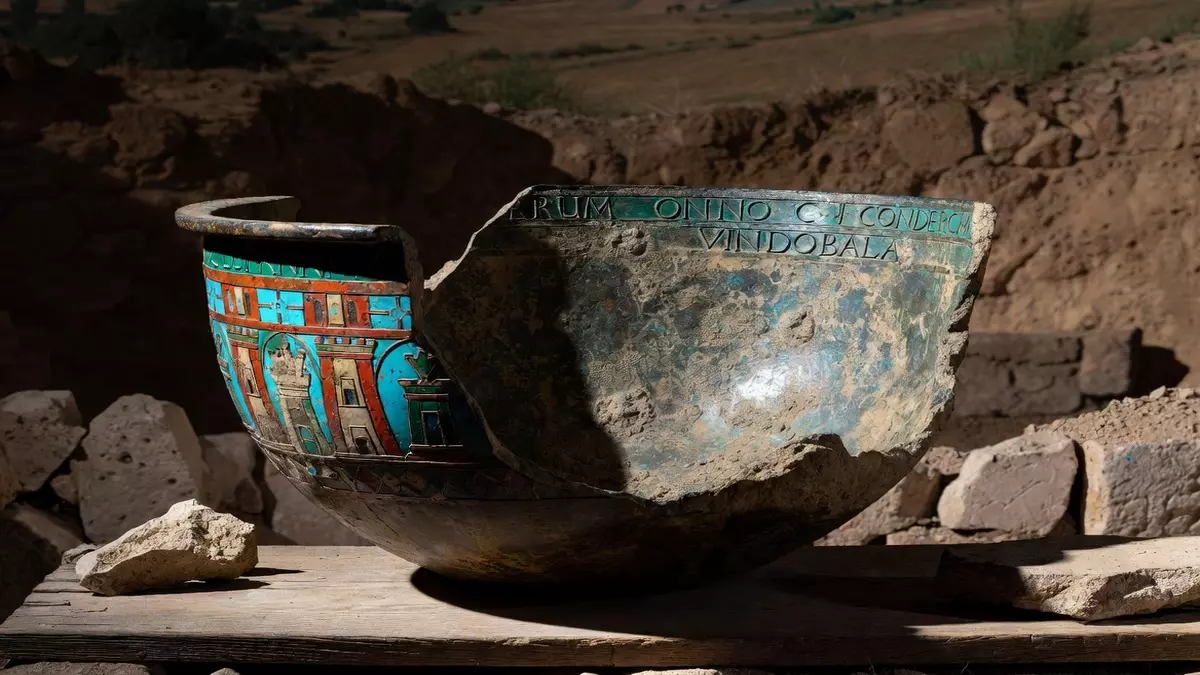
A remarkable bronze cup discovered in central Spain is shedding new light on the personal lives of Roman soldiers and the vast connections that tied the empire together. Known as the Berlanga Cup, this rare artifact bears inscriptions of forts along Hadrian’s Wall in northern Britain — nearly 2,000 kilometers away — revealing how military service, travel, and memory linked distant corners of the Roman world in the second century CE.
This extraordinary find not only adds to a small but significant group of “Hadrian’s Wall pans” but also challenges previous assumptions about their purpose and distribution. It brings to life the story of a soldier who likely carried this keepsake home after serving on the empire’s remote northern frontier.
Roman Cup Found in Spain Links to Hadrian’s Wall
### The Discovery Near Berlanga de Duero
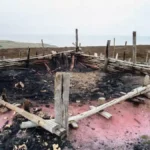
The cup was recovered in fragments at La Cerrada de Arroyo, a rural site near Berlanga de Duero in Spain’s Soria province. After the initial find, archaeologists conducted ground-penetrating radar surveys and surface investigations that revealed buried Roman structures, including rectangular buildings and possible floors. Associated pottery suggests the area saw Roman occupation from the first to fourth centuries CE.
About 90 percent of the vessel survives, allowing experts to reconstruct its original form through detailed 3D modeling. The cup measures just over 11 centimeters wide and nearly 8 centimeters high — a portable size perfect for a soldier’s personal belongings.
### Unique Inscriptions Connecting to Hadrian’s Wall
What makes the Berlanga Cup truly special is its rim inscription listing four forts from the eastern section of Hadrian’s Wall: Cilurnum, Onno, Vindobala, and Condercum. This is the only known example of its type featuring eastern forts. Previous vessels in this rare group, such as the famous Rudge Cup, primarily referenced central and western sections of the wall.
Hadrian’s Wall, constructed around 122 CE under Emperor Hadrian, stretched 73 miles across northern Britain to mark and defend the empire’s frontier. The wall included forts, milecastles, and turrets manned by auxiliary troops from across the empire. The Berlanga Cup’s selective naming of specific eastern forts suggests it was a personalized item rather than part of a standardized set covering the entire wall.
### Stunning Craftsmanship and Scientific Analysis
The cup’s thin bronze walls were originally adorned with vibrant colored enamel in red, green, blue, and turquoise. Geometric patterns, tower-like motifs, and decorative bands demonstrate high-quality Roman craftsmanship. Scientific analysis confirmed it was made from a leaded copper alloy typical of second-century Roman work. Lead isotope testing traced the metal’s source to northern Britain, while the enamel technique matches traditions from Roman Britain rather than Hispania.
These details strongly indicate the vessel was produced near Hadrian’s Wall and later carried to Spain. Dating places its creation between about 124 and 150 CE, or slightly later in the second century, when the named forts were fully operational.
### Military Mobility and the Cohors I Celtiberorum
Researchers believe the cup traveled to Spain through the movement of Roman soldiers. A compelling link is the Cohors I Celtiberorum, an auxiliary unit originally recruited from the Celtiberian region of Hispania. This cohort is known to have served on Hadrian’s Wall. A veteran from this unit could have acquired the cup during service — perhaps as a personal souvenir or retirement gift — and brought it home.
Such objects often held deep personal meaning. They commemorated time spent at specific forts, friendships formed, and the hardships of frontier duty. The cup’s presence in rural Spain highlights how Roman military careers created lasting connections across vast distances, carrying memories and material culture from Britain back to the Mediterranean.
### Broader Context of Hadrian’s Wall Pans
Hadrian’s Wall pans form a small but intriguing category of Roman artifacts. These decorated bronze vessels were likely used for drinking or ritual purposes and served as souvenirs or mementos for soldiers and officers. Only a handful have been found, mostly in Britain and occasionally in Gaul (modern France). The Berlanga Cup is only the second example from Hispania and the most complete Spanish specimen.
The discovery challenges earlier ideas that these cups formed neat geographical series representing sections of the wall. Instead, they appear to have been custom-made for individuals with personal ties to specific locations. This personal dimension makes the Berlanga Cup especially valuable for understanding Roman identity and nostalgia.
### Life on Hadrian’s Wall and in Roman Spain
Hadrian’s Wall represented the edge of the Roman world — a heavily fortified frontier facing tribes beyond. Soldiers stationed there endured harsh weather, conducted patrols, and maintained supply lines. Auxiliary units like the Celtiberians brought their own cultural traditions while adopting Roman military practices.
In contrast, the interior of Hispania offered a more settled provincial life. Veterans returning home often received land grants and integrated into local communities. The Berlanga Cup may have served as a tangible reminder of years spent on the empire’s edge, displayed proudly in a Spanish household.
The site near Berlanga de Duero itself reflects the broader Roman presence in Spain. Rural villas, farms, and small settlements supported the empire’s economy through agriculture and trade. Finding such a prestigious military souvenir in this context highlights the reach of Roman imperial service.
### Significance for Roman Military History
This artifact provides rare evidence of how individual soldiers experienced and remembered their service. It illustrates the mobility of auxiliary troops, the circulation of goods across the empire, and the blending of military and civilian life. The cup connects two distant provinces — Britannia and Hispania — through one person’s story, enriching our understanding of the human dimension behind Rome’s vast military machine.
It also underscores the importance of rescue archaeology and careful study of even fragmentary finds. What began as broken pieces in a Spanish field has become a key piece in the puzzle of Roman frontier life.
### Ongoing Research and Future Implications
The Berlanga Cup is currently under further study, with 3D reconstructions helping scholars and the public visualize its original appearance. Future metallurgical and stylistic comparisons may reveal more about its exact workshop and journey. Similar objects, if discovered, could expand our knowledge of soldier souvenirs and cultural exchange.
The find also encourages re-examination of other Roman artifacts in Spain for potential British connections. As digital technologies improve, researchers can better analyze and share such treasures globally.
### Why This Discovery Captivates Us Today
In an era of global connections, the Berlanga Cup reminds us that long-distance travel, cultural mixing, and personal keepsakes are not modern inventions. A soldier from Spain serving in Britain and bringing home a souvenir mirrors contemporary stories of migration and memory. It humanizes Roman history, moving beyond emperors and battles to the experiences of ordinary men who helped build and maintain the empire.
The vessel’s beautiful enamel work and precise inscriptions also showcase the high level of artistry achieved even on the empire’s frontiers, challenging notions of “provincial” quality.
### Conclusion: A Personal Link Across the Roman Empire
The Berlanga Cup stands as a powerful testament to the interconnectedness of the Roman world. From the windswept forts of Hadrian’s Wall to the hills of central Spain, this small bronze vessel carried the memories of military service and the bonds formed across thousands of kilometers.
Its discovery deepens our appreciation for the personal stories behind Rome’s military success and cultural influence. As researchers continue to study the cup, it will keep revealing details about life on the frontier, veteran experiences, and the enduring human need to remember and commemorate important chapters of one’s life.
This unassuming artifact proves that even after nearly two millennia, the Roman Empire still has fresh stories to tell — stories of movement, identity, and connection that resonate powerfully with modern audiences.
### FAQ: Berlanga Cup and Hadrian’s Wall
**What is the Berlanga Cup?**
A rare bronze vessel inscribed with names of four eastern forts along Hadrian’s Wall, discovered in fragments near Berlanga de Duero, Spain.
**Why is it significant?**
It is the only known example listing eastern Wall forts and provides direct evidence of a soldier bringing a personal souvenir from Britain back to Spain.
**How was the cup dated?**
Through stylistic analysis, metal composition, and historical context of the named forts, placing it in the mid-second century CE (around 124–150 CE or later).
**Who likely owned it?**
A soldier from the Cohors I Celtiberorum, a Hispania-recruited unit that served on Hadrian’s Wall, possibly as a keepsake from his service.
**Where was the cup made?**
Scientific analysis points to northern Britain, based on the lead source and enamel technique typical of Roman workshops there.
**Will more similar cups be found?**
Possibly. Continued archaeological work in Spain and Britain may uncover additional examples, further illuminating Roman military culture and mobility.