
**Nile River Stability Powered Rise of Ancient Napata**
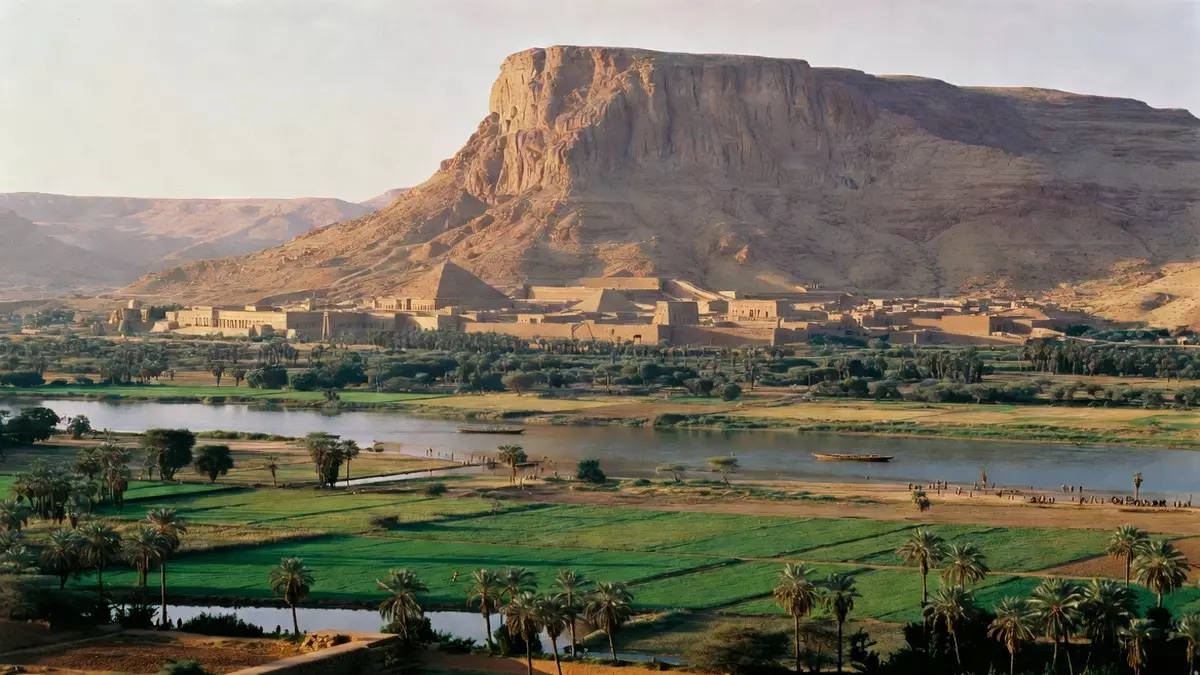
Ancient Napata, one of the most important cities in Sudan’s Kushite kingdom, thrived for centuries thanks in large part to a remarkably stable stretch of the Nile River. New geological and archaeological research reveals how shifts in the river’s behavior around 4,000 years ago created ideal conditions for long-term settlement, farming, and cultural development at the base of the sacred mountain Jebel Barkal.
This study offers fresh insight into how environmental factors shaped one of Africa’s great early civilizations. It shows that the Kushite kingdom’s heartland benefited from a predictable Nile that supported agriculture and reduced the threat of catastrophic flooding, allowing Napata to grow into a major political and religious center.
Nile River Stability Powered Rise of Ancient Napata

### Revolutionary Research on the Nile at Jebel Barkal
A collaborative team from the University of Michigan, working closely with Sudanese colleagues, conducted detailed fieldwork in the river valley beneath Jebel Barkal. Their research, published in the *Proceedings of the National Academy of Sciences*, analyzed 26 deep sediment cores taken across the floodplain. These cores, reaching depths of five to 13 meters, provided a comprehensive record of the Nile’s activity over the past 12,500 years.
Using advanced techniques including optically stimulated luminescence (OSL) dating, radiocarbon analysis, and examination of pottery fragments, the researchers constructed a precise timeline of river behavior. The results highlight a dramatic transformation around 4,000 years ago, when changing rainfall patterns caused the Nile to shift from aggressively eroding its valley to depositing thick layers of sediment.

### How the Nile Changed Course
During the early and middle Holocene, the Nile cut deeply into the landscape. But as climate patterns evolved, the river slowed and began building up its floodplain. Near Jebel Barkal, nearly 10 meters of clay and silt accumulated, creating broad, fertile land ideal for agriculture.
The Fourth Cataract upstream played a crucial stabilizing role. The rapids and islands in this stretch reduced the river’s energy, allowing sediment to settle more easily. The relatively narrow valley further helped contain floodwaters, preventing the kind of destructive inundations that plagued other regions. This combination produced a reliable water source and productive farmland that could sustain growing populations year after year.
 Vikings (Quiz)
### Jebel Barkal and the Birth of Napata
Jebel Barkal, a striking sandstone mountain, held deep religious significance for Kushite people. Viewed as a sacred site associated with the god Amun, it became a focal point for temples, palaces, and royal pyramids. The stable Nile floodplain at its base provided the perfect setting for a thriving city.
Napata emerged as a major urban center around 1070 BCE and remained influential until approximately 350 CE. At its height, it served as a political capital and spiritual heartland of the Kushite kingdom. Rulers built impressive monuments here, including the famous Amun Temple complex at Jebel Barkal. The city connected Kush with Egypt and broader trade networks across Northeast Africa and the Mediterranean.
The predictable Nile supported intensive agriculture, while the sacred mountain reinforced Napata’s status as a religious capital. Together, these natural and cultural features enabled the city to flourish for more than a millennium.
### Environmental Stability and Human Settlement
The research demonstrates a clear link between river dynamics and human success. A stable Nile reduced risks from extreme flooding and ensured reliable access to water for irrigation and daily needs. This environmental security allowed communities to invest in permanent settlements, monumental architecture, and complex social organization.
In contrast to more volatile sections of the Nile, the stretch near the Fourth Cataract offered a relatively safe and productive environment. This stability likely contributed to Napata’s longevity even as other centers faced challenges from climate shifts or political upheaval.
### Kushite Kingdom and Its Nile-Based Power
The Kushite kingdom, also known as Nubia in some contexts, represented one of ancient Africa’s most powerful states. At times, Kushite rulers even controlled Egypt during the 25th Dynasty. Napata served as a key ceremonial and administrative hub during much of this history.
The city’s location combined strategic, economic, and spiritual advantages. The Nile facilitated trade in gold, ivory, ebony, and other valuable goods. Fertile floodplains supported surplus food production that sustained urban populations and specialist craftspeople. Jebel Barkal’s religious importance drew pilgrims and reinforced royal legitimacy.
By showing how Holocene river changes created these favorable conditions, the new study helps explain why Napata became such a durable center of power.
### Ongoing Challenges and Research in Sudan
Political instability and conflict in Sudan have complicated archaeological work in recent years. Despite these difficulties, Sudanese archaeologists from the National Corporation for Antiquities and Museums continue vital research, often in partnership with international teams. Their dedication preserves knowledge of a region that has received far less attention than neighboring Egypt.
This collaborative approach enriches global understanding of African civilizations and highlights the resilience of local heritage professionals working under difficult circumstances.
### Broader Lessons About the Nile and Ancient Societies
The Nile has shaped human history in Northeast Africa for thousands of years. From the rise of Egyptian dynasties to the development of Kushite culture, river behavior influenced where people settled, how they farmed, and how societies evolved.
The Napata study adds important data to this bigger picture. It shows that local variations in river dynamics — such as the stabilizing effect of the Fourth Cataract — could create pockets of environmental security that supported long-term cultural flourishing. Similar processes likely played out at other key sites along the Nile.
Climate change during the Holocene, including shifts in African monsoon patterns, drove many of these transformations. Understanding past responses to environmental change offers valuable perspective for modern societies facing their own climate challenges.
### Significance for African Archaeology
This research underscores the importance of geoarchaeological studies in Africa. By combining sediment analysis, dating methods, and traditional archaeology, scholars can reconstruct ancient landscapes and better interpret human decisions.
Napata’s story challenges older views that portrayed Kushite achievements as secondary to Egyptian ones. Instead, it reveals a sophisticated civilization that skillfully adapted to and benefited from its specific environmental setting.
Future work at Jebel Barkal and surrounding areas will likely yield even more insights as techniques improve and more sites are investigated.
### Connecting Past and Present
Today, the Nile remains central to life in Sudan and Egypt. Modern development projects, agriculture, and climate pressures continue to reshape the river, much as they did in antiquity. Studying ancient adaptations at places like Napata provides historical depth to contemporary discussions about water management and sustainability.
The sacred mountain of Jebel Barkal still stands as a powerful symbol of cultural heritage. Its temples and pyramids attract researchers and visitors, reminding the world of Kush’s enduring legacy.
### Conclusion: The Nile’s Enduring Role in Kushite Success
The long-term stability of the Nile near Jebel Barkal played a decisive role in the rise and persistence of ancient Napata. By creating fertile floodplains, reliable water access, and a manageable flood regime, the river provided the foundation upon which Kushite rulers built one of Africa’s most influential kingdoms.
This new research beautifully illustrates the deep connection between environmental conditions and human achievement. It enriches our understanding of how the Kushite civilization developed and highlights the sophisticated ways ancient African societies adapted to their dynamic landscapes.
As ongoing studies continue despite regional challenges, Napata and Jebel Barkal keep revealing secrets about the past. The story of the Nile’s influence reminds us that geography and environment have always shaped the course of civilizations — and that careful scientific work can bring these hidden relationships to light.
The ancient city’s success stands as a testament to human ingenuity in harmony with nature, offering inspiration and valuable lessons for today’s world.
### FAQ: Nile River and Ancient Napata
**What is Napata and why was it important?**
Napata was a major political and religious center of the Kushite kingdom in ancient Sudan. It flourished from about 1070 BCE to 350 CE and featured temples, palaces, and pyramids at Jebel Barkal.
**How did the Nile influence Napata’s development?**
Around 4,000 years ago, the river shifted to a more stable regime with sediment deposition, creating a fertile, flood-resistant floodplain ideal for farming and settlement.
**What research methods were used in the study?**
Researchers analyzed 26 deep sediment cores using OSL and radiocarbon dating, combined with pottery analysis and archaeological evidence.
**What role did Jebel Barkal play?**
The sacred mountain served as a religious focal point and helped anchor the city. Its location near a stable section of the Nile supported long-term occupation.
**When did major changes in the Nile occur?**
A key shift happened around 4,000 years ago, when the river began building up sediment instead of eroding the valley, creating favorable conditions for Kushite settlement.
**Is research at Napata still continuing?**
Yes. Sudanese archaeologists continue working at the site with international partners despite regional challenges, adding valuable new data to the historical record.