
**Record 3,150 Viking Coins Found in Norway Hoard**
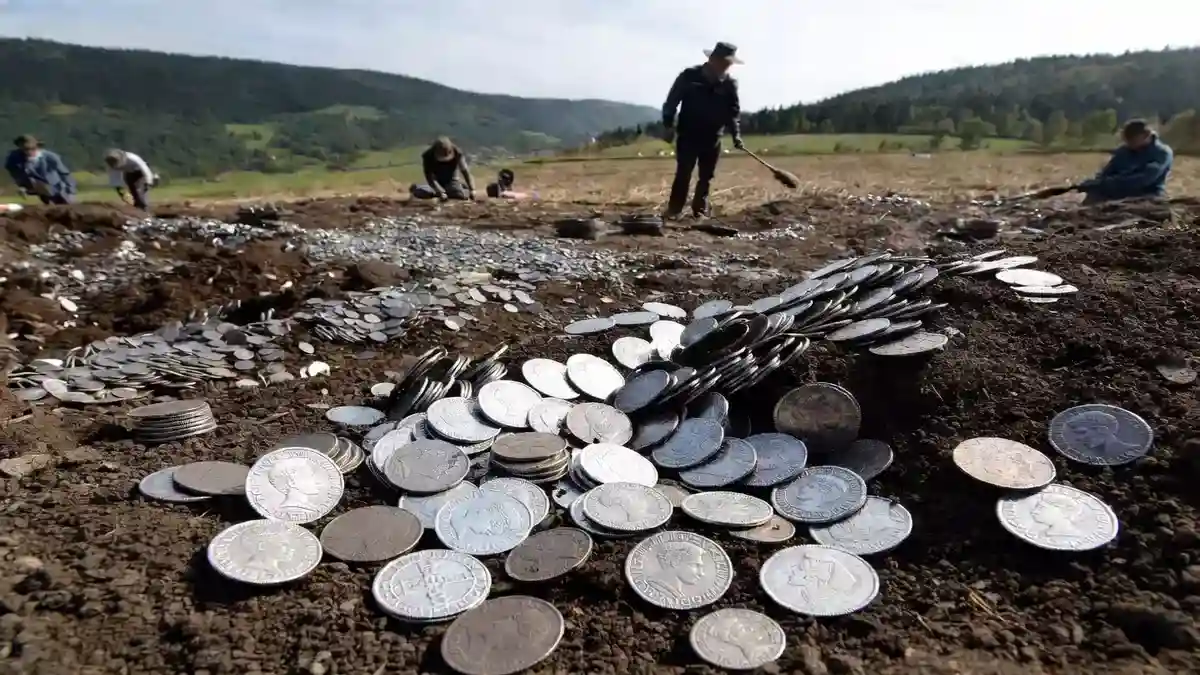
Archaeologists in Norway have unearthed the largest Viking Age coin hoard ever discovered in the country, pulling more than 3,150 silver pieces from a quiet field near Rena. This extraordinary find offers a stunning snapshot of 11th-century trade, wealth, and daily life during the final chapter of the Viking Age, and experts believe even more coins may still lie hidden in the soil.
The Mørstad Hoard, as it is now known, has captured the attention of historians and history enthusiasts worldwide. It reveals the far-reaching economic connections of Viking society and provides fresh evidence of Norway’s transition to its own national currency system.
Largest Viking Age Coin Hoard Ever Found in Norway

### How the Massive Discovery Unfolded
The story began on April 10 when two experienced metal detectorists, Rune Sætre and Vegard Sørlie, were exploring farmland at Mørstad in Østerdalen. They uncovered 19 silver coins and immediately halted their search to notify county archaeologists. This responsible action proved crucial, allowing professionals to secure the site and prevent any damage from amateur digging.
Initial expectations were modest — perhaps a small personal stash. But as the professional team moved in, the scale became breathtaking. The count climbed to 70 coins on the first full day of excavation, then rapidly passed 500, 1,000, and eventually surpassed 3,150. Work continues today, with detectors still signaling more finds beneath the surface.
The careful, methodical approach has preserved vital context that might otherwise have been lost. Archaeologists transferred the coins to the Museum of Cultural History in Oslo for detailed study and conservation.
### Inside the Mørstad Hoard: Coins from Across Europe
Specialists date the collection from the late 10th century to the 1040s, with the burial likely occurring around 1050 CE. This timing places the hoard at the very end of the Viking Age, just before major societal changes swept through Scandinavia.

The vast majority of coins originated in England and German territories, with smaller quantities from Denmark and Norway. Many bear the names of famous rulers, including Cnut the Great, Æthelred II (Ethelred the Unready), Otto III, and Norway’s own Harald Hardrada. One particularly striking example shows a king’s profile with the clear inscription “EDELRED.”
What makes this hoard especially valuable to researchers is the presence of early Norwegian coins. King Harald Hardrada, who ruled from 1046 to 1066, introduced Norway’s first national coinage after returning from service in Byzantium around 1045. Before this reform, the Norwegian economy relied heavily on foreign silver. The mix of newly minted local coins alongside well-worn international pieces suggests the hoard was buried during the earliest phase of this important monetary shift.
### Viking Age Economy and Far-Reaching Trade Networks
During the 11th century, silver served as the lifeblood of Viking commerce. Merchants and raiders traveled extensively, bringing back wealth from raids, trade, and mercenary work across Europe and beyond. The Mørstad Hoard perfectly illustrates these connections. English and German coins circulated widely in Scandinavia, exchanged for furs, timber, ivory, and other northern goods.
Alongside the intact coins, archaeologists recovered fragments of silver items known as “hack-silver.” In Viking society, the exact weight of silver mattered more than the form it took. A piece of a decorative brooch could be chopped up and used as payment just like a minted coin. This flexible system supported everything from local market transactions to long-distance trade voyages.
The discovery highlights how deeply integrated Viking Age Norway was with the broader European economy. Silver flowed northward through established routes, fueling the growth of towns, the construction of churches, and the consolidation of royal power.
### Remarkable Preservation and Burial Context
The coins survived in excellent condition thanks to the relatively stone-free soil at the site. Many still display crisp details and legible inscriptions nearly 1,000 years after they were buried. This level of preservation is rare and allows researchers to study minting techniques, wear patterns, and economic circulation with exceptional clarity.
Experts believe the silver was originally stored in a leather pouch or similar organic container that eventually decomposed. Centuries of farming activity then scattered the coins across the field through repeated plowing. Despite thorough surveys with ground-penetrating radar, no associated buildings, graves, or structures have been found, suggesting the owner deliberately hid the valuables for safekeeping during uncertain times.
Periods of political instability, succession disputes, or threats of conflict often prompted such deposits. Burying wealth was a common practice across the Viking world when people needed to protect their assets without banks or formal financial institutions.
### Why Norwegian Coins Matter Most
The Norwegian issues in the hoard have generated particular excitement. Harald Hardrada’s reforms marked a significant step toward economic independence and royal authority. Finding early examples alongside dominant foreign currency offers direct archaeological proof of this transitional moment. It helps historians understand how Norway moved from a decentralized, raid-and-trade economy toward more structured state institutions.
Harald Hardrada himself remains one of the most legendary figures of the Viking Age — a warrior who fought in Constantinople, sought the English throne, and died at the Battle of Stamford Bridge in 1066, an event often seen as the definitive end of the Viking era. The coins bearing his influence connect this famous king directly to everyday economic realities.
### Broader Impact on Viking Archaeology
This record-breaking find stands out as a rare event in Norwegian archaeology. Most hoards contain far fewer coins, and few have been recovered with such meticulous documentation. The Mørstad discovery provides an unparalleled dataset for studying 11th-century metallurgy, iconography, and economic behavior.
It also demonstrates the growing value of responsible metal detecting. When detectorists collaborate with professionals, as happened here, the results can dramatically enrich our understanding of the past. The site is now fully protected under Norway’s cultural heritage laws and remains closed to the public while work continues.
### What Life Was Like for the Hoard’s Owner
Imagine a prosperous farmer, merchant, or local leader in 11th-century Østerdalen. They had accumulated significant wealth through trade or service, then chose to bury it safely rather than carry it or keep it at home. The decision to hide such a large sum reflects both the opportunities and dangers of the period — thriving commerce alongside political volatility.
The hoard’s burial around 1050 places it in a dynamic era. Christianity was spreading, towns were developing, and traditional Viking ways were evolving. This collection captures that moment of transformation in a tangible way.
### Ongoing Research and Future Insights
Conservators and numismatists at the Museum of Cultural History continue examining the coins. Future studies may include detailed metallurgical analysis, comparison with other European hoards, and digital cataloging for global research access. As additional coins emerge, the story of the Mørstad Hoard will only grow richer.
This discovery also encourages more people to learn about responsible heritage practices. Finding something significant is exciting, but proper reporting ensures the maximum historical value is preserved for everyone.
### Conclusion: A Golden Window into Viking Norway
The Mørstad Hoard, with its record-shattering 3,150+ silver coins, represents far more than buried treasure. It opens a vivid window into the economic networks, royal ambitions, and daily realities of late Viking Age society. From the workshops of England and Germany to the fields of Norway, these coins tell stories of connection, power, and change.
As archaeologists continue their careful work, this find reinforces the enduring fascination of the Viking Age. It reminds us how moments of chance discovery, combined with expert investigation, can reshape our understanding of history. The Mørstad Hoard doesn’t just add to museum collections — it brings the voices of 11th-century Scandinavians back to life through the very money they handled and trusted.
In an era when global connections feel uniquely modern, this ancient hoard proves that long-distance trade and cultural exchange have deep roots. Norway’s largest Viking coin discovery stands as a powerful testament to the sophistication and reach of Viking Age civilization.
### FAQ: Norway’s Record Viking Coin Hoard
**How many coins were found in the Mørstad Hoard?**
More than 3,150 silver coins have been recovered so far, making it the largest Viking Age hoard ever found in Norway, with additional pieces still emerging.
**When was the hoard buried and why?**
It was likely hidden around 1050 CE. People in the Viking Age commonly buried valuables during times of uncertainty for safekeeping, and no associated structures suggest it was a deliberate deposit.
**What rulers appear on the coins?**
The collection includes coins from Cnut the Great, Æthelred II, Otto III, and Harald Hardrada, reflecting wide European trade connections.
**Why are the Norwegian coins especially important?**
They represent the early introduction of Norway’s national coinage under Harald Hardrada, marking a key economic shift from reliance on foreign silver.
**Will the public be able to see the coins?**
Yes. After conservation and study at the Museum of Cultural History in Oslo, many coins will likely go on display, allowing visitors to experience this remarkable piece of Viking history.
**How were the coins preserved so well?**
The stone-free soil at the site minimized damage, and many retain sharp details and inscriptions after nearly 1,000 years underground.