
**Croatian Mithras Sanctuary Rewrites Roman Temple Traditions**
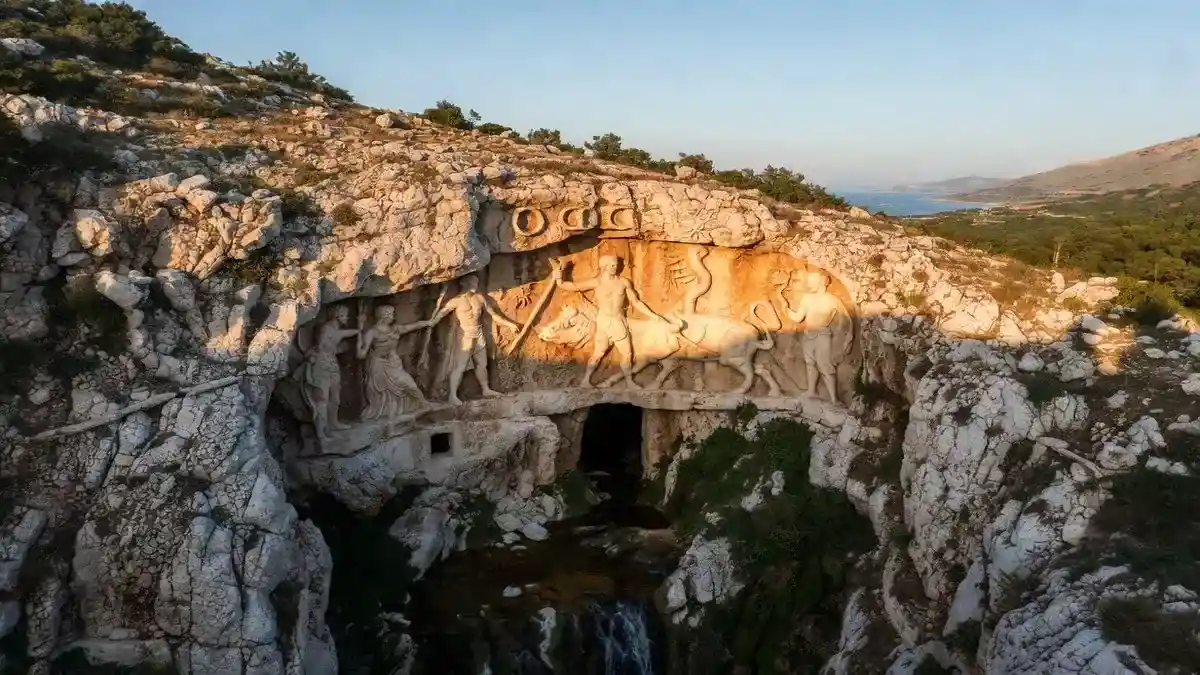
Archaeologists have uncovered a remarkable open-air Mithras sanctuary in Močići, Croatia, that challenges long-held assumptions about how the mysterious Roman cult practiced its rituals. Instead of the typical enclosed underground temples found across the empire, this site integrates natural landscape features—rock, cave, and spring—into its sacred space, revealing a more flexible and locally adapted form of worship.
This discovery near the ancient city of Epidaurum on the Adriatic coast offers fresh insights into the spread and evolution of Mithraism, a popular mystery religion among Roman soldiers and merchants. It shows how ancient worshippers blended Persian origins, Roman traditions, and the physical environment of Dalmatia into a unique ritual landscape.
Croatian Mithras Sanctuary Rewrites Roman Temple Traditions
### The Origins and Spread of Mithras Worship
Mithras worship in the Roman Empire drew from ancient Iranian roots, where the deity Mithra represented contracts, light, truth, and cosmic order in pre-Zoroastrian and Zoroastrian traditions. As Roman soldiers and traders carried these ideas westward from the 2nd to 4th centuries CE, the cult transformed into a mystery religion emphasizing initiation rites, communal meals, and symbolic rebirth.
Traditional Mithraea—dedicated sanctuaries—typically featured long, dark enclosed chambers with side benches for feasting and a prominent tauroctony relief at the far end depicting Mithras slaying a bull. These spaces appeared from military outposts in Britain to bustling urban centers in Italy, creating a seemingly uniform architectural template across the empire.
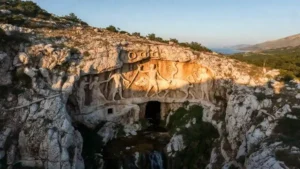
The Močići site breaks this mold dramatically. Located above the Adriatic coast, it features a carved limestone relief of the tauroctony set directly above a natural cave entrance, fully integrated into the open landscape rather than hidden inside a built structure.
### Exploring the Unique Močići Landscape
The central Mithras relief follows classic Roman iconography: the god slaying the bull, accompanied by a dog and serpent, a scorpion at the bull’s underside, torchbearers (Cautes and Cautopates) on either side, and symbols of the sun and moon in the upper corners. Yet the setting is anything but conventional.
There are no enclosing walls, artificial roof, or built-in dining benches. The cave itself is quite small, measuring only about 17.7 square meters—far too compact for the group rituals common in standard Mithraea, which often exceeded 60 square meters. From inside the cave, viewing the relief is difficult, but from the exterior hollow, the image aligns perfectly with the surrounding terrain and becomes fully visible to gathered participants.
Advanced photogrammetry and field mapping reveal a natural hollow around the cave spanning roughly 14 meters, with about 120 square meters of usable open space around the rock face. This exterior zone likely served as the primary area for communal activities, allowing worshippers to engage with the sacred scene while connected to the broader landscape.
A year-round natural spring flows through the site, alongside striking limestone formations. Across the Roman world, Mithraic temples often incorporated artificial caves and water features to symbolize the god’s rock birth and life-giving forces. At Močići, these elements occur naturally, requiring no human construction—highlighting how the environment itself shaped religious practice.
### A Second Relief and Local Connections
Inside the cave, researchers documented a second relief frequently associated with Silvanus, the Roman god of forests, herding, and wild places. This fits the Dalmatian context perfectly, where pastoral communities relied on hillside grazing and seasonal water sources for their livestock. The spring at Močići would have supported both daily herding routes and ritual gatherings, blending practical rural life with sacred observance.
This combination of Mithras and Silvanus reflects cultural layering in the provinces. Local communities adapted the imported mystery cult to resonate with their existing relationship to the rugged Adriatic terrain.
### How Močići Challenges Traditional Views of Mithraism
For decades, scholars viewed Mithraism as a highly standardized religion with consistent temple designs modeled on cosmic principles. The Močići sanctuary demonstrates greater diversity. Worshippers here did not impose an artificial sacred architecture; instead, they selected and enhanced a dramatic natural setting that already embodied key mythological elements—the rock-born god emerging from stone and life-giving waters.
This open-air approach may have allowed larger gatherings and a more immersive experience tied to the cycles of nature, sun, and seasons. It suggests that in frontier regions like Dalmatia, Mithraism adapted fluidly to local geologies and lifestyles rather than strictly replicating urban or military templates.
The site’s integration of rock, water, and open ground echoes older Iranian associations with Mithra while aligning with Roman symbolic language. Such findings illustrate the dynamic interplay between imperial religion and provincial realities, where Persian roots, Roman practices, and indigenous landscapes merged into something distinctive.
### Significance for Roman Provincial Religion
Dalmatia, with its limestone cliffs, abundant springs, and pastoral economy, provided an ideal backdrop for this type of sanctuary. Communities here lived close to the land, moving livestock seasonally and depending on natural resources. The Močići site shows how Mithras worship could enhance rather than replace these connections.
By studying this location, researchers gain a richer understanding of how mystery cults spread and evolved beyond major population centers. It underscores the importance of landscape archaeology in revealing variations that built structures alone might obscure.
Modern techniques like photogrammetry have been crucial, creating detailed 3D records of the reliefs and surrounding terrain without disturbing the fragile site. These methods allow ongoing analysis and virtual reconstruction for broader scholarly and public access.
### Daily Life and Ritual Practices at the Sanctuary
Worshippers likely gathered in the open hollow for ceremonies, with the tauroctony relief serving as a dramatic focal point visible against the natural backdrop. The spring could have played a role in purification rites or symbolic reenactments of cosmic creation. The smaller cave interior may have been reserved for more intimate initiations or priestly activities.
The presence of Silvanus reinforces themes of protection for herds and wilderness, resonating with the needs of local farmers and herders who formed part of the cult’s membership alongside soldiers and merchants.
This setup contrasts with the secretive, exclusive atmosphere of enclosed Mithraea, potentially making the Močići sanctuary more accessible or community-oriented within its rural setting.
### Broader Implications for Understanding Ancient Religions
The Močići discovery contributes to a growing body of evidence that Roman religion was far more adaptable than traditional models suggest. Mystery cults like Mithraism thrived precisely because they could incorporate local elements, creating meaningful spiritual experiences across diverse environments.
It also highlights the enduring appeal of Mithras as a deity connected to light, order, and masculine virtues—qualities valued by Roman military and administrative classes but expressed differently depending on location.
In the context of the late Roman Empire, such sanctuaries may have served as anchors of cultural identity amid political and social changes, before Christianity eventually supplanted many pagan traditions in the 4th century.
### Preservation and Future Research
Sites like Močići face challenges from natural erosion, vegetation, and modern development. Continued archaeological work, combined with conservation efforts, will help protect this important cultural heritage. Future studies may include detailed material analysis of the reliefs, environmental reconstruction of the ancient landscape, and comparisons with other atypical Mithraic sites.
The publication of these findings in a leading academic journal marks a significant contribution to Roman archaeology, encouraging scholars to look beyond standard temple forms when investigating mystery cults.
### Conclusion: A New Perspective on Mithras in the Roman World
The open-air Mithras sanctuary at Močići stands as a powerful example of how ancient religions adapted to their surroundings. By embracing the natural cave, spring, and rock formations of the Croatian coast, worshippers created a sacred space that honored both their imported beliefs and the realities of daily life in Dalmatia.
This site challenges us to rethink the uniformity of Roman religious architecture and appreciate the creativity and flexibility of provincial communities. It brings us closer to the lived experience of Mithras devotees, who found divinity not only in man-made temples but in the dramatic landscapes around them.
As research continues, the Močići sanctuary promises to illuminate more about the complex tapestry of Roman religion, its Persian influences, and its deep connections to the natural world. Discoveries like this remind us that the past still holds surprises, reshaping our understanding of history one carved relief at a time.
### FAQ: Močići Mithras Sanctuary
**What makes the Močići site different from typical Mithraea?**
Unlike enclosed underground temples with benches and roofs, Močići is an open-air sanctuary using a natural cave and rock face. Rituals likely took place in the surrounding landscape rather than inside a built chamber.
**Where is the Močići Mithras sanctuary located?**
It sits above the Adriatic coast near ancient Epidaurum in modern-day Croatia, in the Močići area of Dalmatia.
**What is the tauroctony relief?**
This central image shows Mithras slaying a bull, a core symbol in Mithraism representing cosmic sacrifice, fertility, and renewal. The Močići version includes traditional elements like torchbearers, animals, and celestial symbols.
**Why was a natural spring important to the sanctuary?**
Springs symbolized life-giving forces and connected to Mithraic themes of water and rebirth. At Močići, the natural spring enhanced the site’s sacred character without needing artificial construction.
**How does this discovery impact our view of Roman religion?**
It demonstrates greater diversity and local adaptation in Mithras worship, showing that practices varied by region and landscape rather than following a single rigid template across the empire.
**Are there plans for further excavation at the site?**
Ongoing studies include additional analysis of the reliefs, environmental context, and comparisons with other locations. Digital documentation helps preserve and share the findings widely.